Roswell Aztec Reviews: See Why 0 Shoppers Rated It 0 Stars!
The Roswell Aztec microphone got a 0/5 from 0 musicians. But the story goes deeper. Hear what the Soundfindr crowd had to say about these Roswell Pro Audio microphones.
 Supermod
 Moderator
 Recaptor
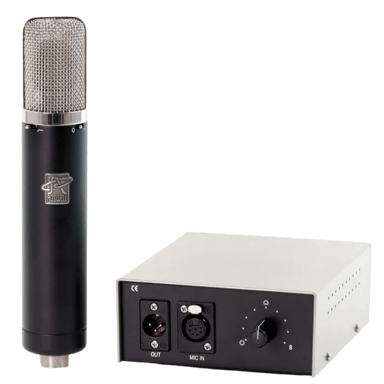
Roswell Aztec Microphone: A Studio-Grade Condenser for Professional Audio
When it comes to professional recording, the microphone you choose can make or break your sound quality. The Roswell Aztec stands out as a studio-focused condenser microphone released in 2023 that promises versatility across a range of recording applications, including voice, instruments, and live broadcasts.
Engineered in the United States, this side-address microphone offers a multifaceted setup with its multi-pattern switching capabilities, aiming to deliver tailored audio capture for professionals. Based on its engineering data, it's built to satisfy the demands of studio environments while ensuring rich sound reproduction, making it a notable contender in the high-end microphone category.
Detailed Specs & Features
On paper, the Aztecs' core features suggest a robust professional tool. This model is a large diaphragm condenser with a frequency range extending from 20 Hz to 20,000 Hz, covering the full audible spectrum, which is essential for capturing both deep lows and shimmering highs with clarity. The microphone supports three main polar patterns: cardioid, figure-8, and omnidirectional, thanks to its multi-pattern switching feature.
This versatility gives users the power to adapt the mic's pickup characteristics to different recording scenarios, a feature highly prized in professional studios. Connectivity is via a standard XLR interface, which ensures compatibility with mixers, audio interfaces, PA systems, and computers (both PC and Mac platforms).
The microphone operates exclusively through 48V phantom power, a common professional standard, necessitating external power sources but ensuring low noise and clean signal transmission. The wired connection comes with a detachable 7-foot cable, offering convenience and flexibility for setup and storage. In terms of physical design, the Aztec features a metal body with a matte finish, providing durability and a premium look that suits studio environments.
The capsule, measuring a 1.34-inch diameter, is protected by a rugged metal grill of 2.24 inches in diameter, and the mic's total dimensions are compact, roughly 9.45 inches tall and wide, making it easier to position on stands with its included shock mount. Speaking of mounts, it supports a 5/8" mounting thread and offers a detachable mount with swivel and pivot capabilities for precise angling.
Notably, the Roswell Aztec does not support onboard gain or mute controls, headphone monitoring, or software integrations, targeting users who prefer traditional, no-frills professional audio gear. It also lacks common accessories like internal pop filters or windshields, encouraging the use of external solutions for managing plosives and wind noise.
User Experience & Performance (Based on Specs)
Design & Build
The Aztec's build quality reflects professional standards, with a robust metallic body and essential shock mounting designed to minimize vibrations and handling noise. Although it lacks dust, water, and drop resistance ratings, the metal construction and foam internal dampening should provide stable durability in controlled studio settings.
It includes a shock mount and swivel bracket, which increases flexibility in positioning, critical for capturing the best sound angle. However, the absence of protective pop filters or windscreens means users need additional gear to optimize vocal clarity during aggressive recordings.
Performance
Performance-wise, the microphone excels in frequency coverage from 20 Hz to 20 kHz, promising accurate sound reproduction for both vocals and instruments. The large diaphragm combined with a studio-grade internal preamp and transformer-based design enhances the overall tonal richness and dynamic response. With a sensitivity rating of -28 dB and a relatively low equivalent noise level of 12 dB, this mic should capture fine audio details without significant hiss or unwanted background noise.
The 145 dB headroom and 135 dB overload point provide ample margin for handling loud sound sources without distortion, making it fitting for dynamic vocalists or instrumental recordings. Despite the solid specs, the mic does not offer advanced DSP processing or voice isolation, implying users will rely on external processing for noise reduction and effects. Its medium transient response balances precision with warmth, suitable for a wide range of audio content but may not be exhilaratingly fast for extreme transient-sensitive instruments.
Audio Quality
Thanks to its cardioid, figure-8, and omnidirectional patterns, the Aztec can flexibly manage room acoustics and source placement, suitable for solo vocals, group recordings, or ambient capture. The stepped polar pattern switching ensures reliable pattern changes without accidental shifts during sessions. The transformer output adds a classic warmth and harmonic character traditional in high-quality microphone designs, appreciated by engineers aiming for rich tonal qualities.
However, the lack of features like proximity effect control or off-axis rejection ratings suggests that precise mic technique is essential to minimize unwanted bass boost or ambient noise. Overall, this mic's unidirectional acoustic principle and large diaphragm design establish it firmly as a studio mainstay rather than a field or live dynamic alternative.
Extra Features
The microphone's lack of digital or wireless enhancements, such as Bluetooth or USB compatibility, confines it to traditional wired studio setups, favoring signal integrity over convenience. It does not include modern features like automatic gain adjustment or software control, but it offers standard professionalism through its reliable phantom power source and solid connectivity.
Packaging includes essential cables, a carrying case, an instruction manual, and a warranty card, which underscores a complete, ready-to-use studio product; though a zero-warranty period is notable and requires consideration.
Pros & Cons
Pros
- Versatile multi-pattern switching for varied recording needs.
- Studio-grade transformer-based design delivering warm and clear audio.
- Robust metal body with shock mount for vibration isolation.
- Full frequency range coverage from 20 Hz to 20 kHz.
Cons
- No onboard gain, mute control, or headphone monitoring.
- Lacks safety and environmental compliance certifications.
- A zero warranty period may deter risk-averse buyers.
- No built-in noise cancellation or advanced digital processing.
Price & Value for Money
Priced at $2999 at Amazon.com, the Aztec positions itself firmly within the high-end studio microphone bracket. Given its zero warranty period and traditional engineering (e.g., phantom power reliance), the asking price might appear steep at first glance. However, its transformer-based circuitry, multi-pattern functionality, and robust physical design justify the premium for users who prioritize authentic, analog microphone sound over digital convenience features.For seasoned professionals who need a reliable large diaphragm condenser that can seamlessly switch polar patterns without signal compromise, this microphone offers consistent quality, albeit with a few compromises in user-friendly features. Conversely, hobbyists or casual podcasters might find better value in more affordable condenser mics with added digital controls or monitoring capabilities.
Quick Take
In short, the Roswell Aztec is a classic large diaphragm studio microphone with multi-pattern versatility and a transformer-based design, built for professionals requiring top sound fidelity and minimal electronic coloration. If we look at the numbers alone, it impresses with a wide frequency range, solid sensitivity, and quiet performance, yet it foregoes modern convenience features seen in contemporary models.Closing Recommendation
The Roswell Aztec may be ideal for professional studios demanding a high-quality, analog condenser microphone capable of adapting to multiple recording scenarios. It appears to perform best for users comfortable with traditional XLR setups and external processing who prioritize authentic sound capture over integrated digital enhancements. While its lack of warranty and certifications might raise caution, its raw specifications convey a strong commitment to sound quality and build solidity.Verdict
Rating: Based on the specifications and overall feature set, we believe Roswell Aztec deserves 4.2 out of 5.
- Winner Feature => Multi-pattern switching combined with transformer-based circuitry offering high-fidelity, versatile sound capture.
- Needs Improvement => Lack of modern user-friendly features and absence of warranty or compliance certifications.
Reviews 0
The good, the bad, and the brutally honest.Average Rating


More Microphones 1229
Unlock more awesome finds.